 February
02
February
02
Tags
#storyworthy: The Impossible is Possible – Turning Around a Failed Project
Alice : This is impossible. The Mad Hatter: Only if you believe it is.
-Lewis Caroll, Alice’s Adventures in Wonderland
The Challenge
Users had quietly and without executive knowledge rejected a technical solution that was implemented to save the Company $2m per year.
The Solution
I led a team of consultants, developers, and super users to successfully implement the necessary technical requirements as well as a the training, tools, roles & responsibility definition, and communication required for a successful implementation.
The Details
Have open and honest conversations about the solution gaps. This sounds easier than it is. Build trust with the users. I led a combination of group workshops and had individual conversations to get the information required to move forward. Work with the user community to identify technical issues versus process and user adoption issues.
Dig deep and identify the solution quickly. We had to dive deep into the details with the users and the technical team to identify the solution. The solution involved several complex forecasting algorithms that were constantly updated based off of changing data. We had to ensure the developers fully understood the requirements and use cases, and that the users fully validated the solution. With the time we had already lost – the original solution had been in place for over a year – we had to move. Quickly.
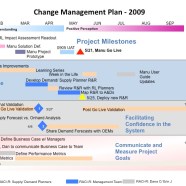
What will it take? Identify what the criteria for success is. For this project, it was full user adoption. Everyone on the logistics teams needed to use this tool for forecasting. That meant no more pet spreadsheets on their local computers. We developed a detailed plan to move the users along the adoption curve while the technical solution was being implemented by having them engaged in detailed data analysis and validation, retraining and validating the current system, and exposing, planning key performance indicators (KPIs) and metrics. To simplify this for the users and Leadership, we branded our activities into 3 goals: 1.) Providing the Tools for Success 2.) Facilitating Confidence in the System 3.) Communicate and Measure Project Goals By doing this, in parallel with the technical implementation, we kept the users engaged along the way and ready when the solution went to production. By identifying and socializing the effort up front, we were able to validate the business case and gain executive buy-in for our project.
The Results
Over the course of several months, the technical team iteratively released functionality into production, we updated training materials and held monthly lunch ‘n learns led by super users, we redefined roles, and manually validated the forecasting algorithms. We tracked our KPI (forecast accuracy) against our current processes and week over week – even before the final requirements were implemented – the technical solution outperformed the current processes. Several months after the technical solution was fully implemented, we calculated our benefits model and confirmed that we were on track to realize over $2m annually in savings for the operation.
#storyworthy The success of this project was a result of having an engaged, smart team of individuals with various strengths. The project also benefitted from sponsors who were willing to invest in their people. As a project management professional, I was given the autonomy, authority, and access to executives to be successful. As a result, we were able to deliver tangible results to the project sponsors and they were so impressed they asked me to replicate this in another line of business.
Do you have #storyworthy successes and/or challenges in turning projects around? Leave a comment below or email me at leadanddeliver@gmail.com

